Kristine Jane Atienza: From the Philippines to Space: What We Bring Beyond Rockets
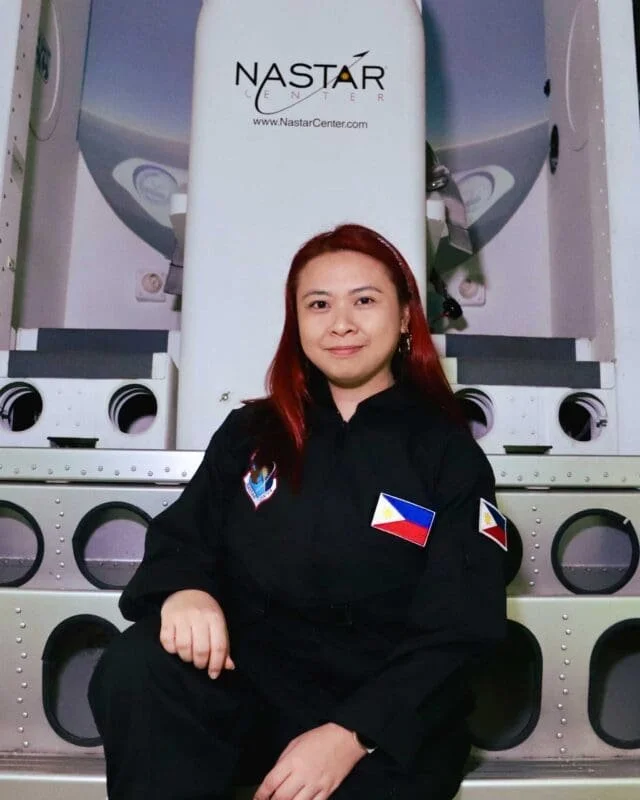
Kristine Jane Atienza is a Filipina public health nutritionist, humanitarian and analogue astronaut whose work bridges food systems, human health, and space exploration. She contributes to national and international nutrition initiatives spanning emergencies, maternal health, infant and young child feeding, and school meals programs.
She worked for organizations such as the World Food Programme, Action Against Hunger, World Vision, and government agencies.
Additionally, Kristine is recognized as the first Filipino analogue astronaut, participating in simulated space missions on Earth to study human performance in extreme environments. She also remains the only Filipino certified for suborbital flight following training at the NASTAR Center.
Kristine founded the Space Nutrition Network alongside other space nutrition experts.
Photo Credit: NASTAR
Space is often framed as an engineering triumph, as it should. Rockets, propulsion systems, precision and power. But beyond the machinery, space is also becoming a human environment. As humanity travels beyond low Earth Orbit and to the Moon and beyond, our bodies will change, human psychology will be tested more than ever, and our culture will travel with us. If we want a future in space that is sustainable and meaningful, we need to stop treating it as a single-discipline problem and start approaching it as a shared human endeavor.
Being present in space, for me, has been more than about the act of going up, more than my own dreams and aspirations, but about what we choose to carry with us when we do.
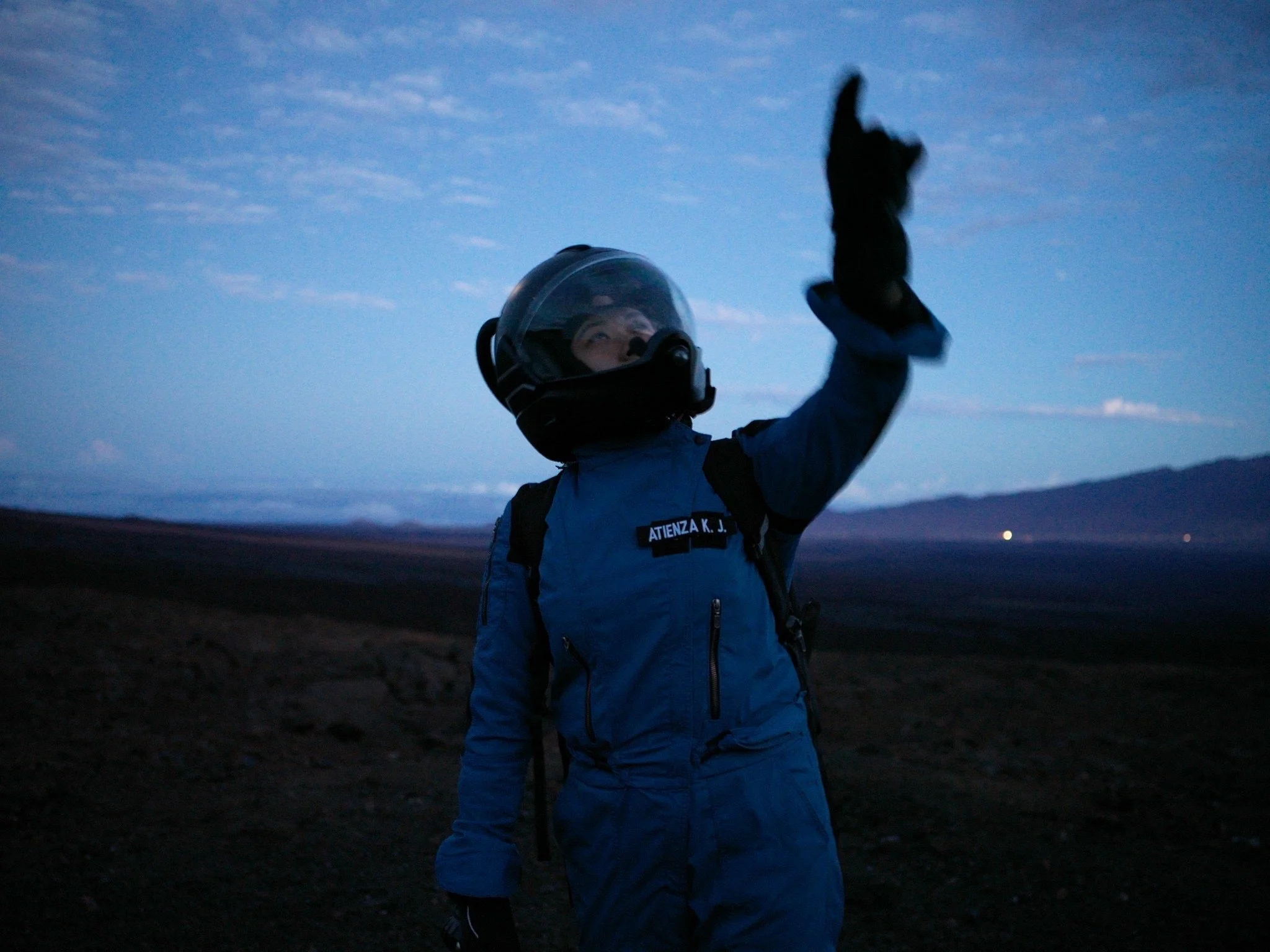

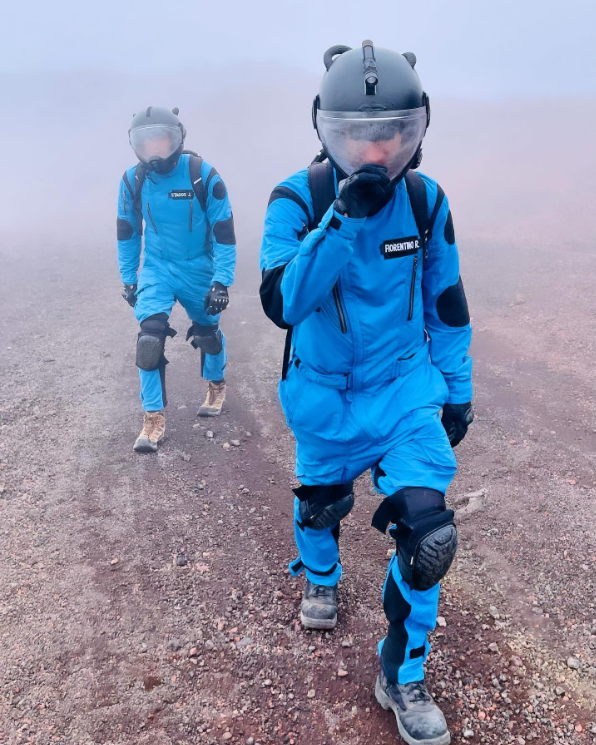
For countries like the Philippines, interdisciplinary space work offers a powerful entry point. We may not yet be launching astronauts yet, but we have deep expertise in health, food systems, disaster response, community-based innovation, and resilience. Knowledge shaped by living in complex, high-risk environments. These are not peripheral skills; they are precisely what long-duration space missions demand. When we undervalue interdisciplinary and Global South perspectives, we don’t just exclude people but we limit innovation.
In many ways, the conditions we navigate daily mirror the constraints of long-duration space missions. Astronauts on missions to Mars or lunar habitats must operate in closed systems where resources are finite, logistics are delayed, and failure carries high consequences. This is not unfamiliar terrain for the Philippines. Our experience with climate-smart agriculture, developing crops and farming systems that can withstand typhoons, flooding, drought, and soil degradation is similar to the systems thinking required for regenerative life-support systems in space. Managing food production in unpredictable climates parallels designing controlled ecological life-support systems where every input and output must be accounted for.

Photo Credit : Jerick Sanchez / Vogue
My own path into space, too, did not come from a straight line. I come from nutrition, public health, and humanitarian work. Fields that are rarely associated with spaceflight, yet deeply relevant to it. Space nutrition, in particular, sits at the intersection of physiology, psychology, engineering, and culture. Food in space is not just about calories or shelf life; it affects bone density, muscle loss, immune function, crew morale, and even identity. What we eat in orbit or on long-duration missions becomes both fuel and familiarity. It reminds us that even in the most extreme environments, we are still human.
Recognizing that space nutrition is still an emerging field, and that I was pursuing it from a country with a six-year-old space agency, the Philippine Space Agency, I understood early on that there was no predefined path to follow. So I carved my own. I began by teaching myself: immersing myself with the available and limited literature, seeking mentors across disciplines, and connecting space physiology with my background in nutrition and public health. But self-learning was only the first step. I began teaching others by giving talks, facilitating discussions, and opening conversations about why food systems, metabolism, and human performance matter in space exploration. In doing so, I started meeting people who shared the same questions and aspirations. Researchers, clinicians, food scientists, engineers, and students from different parts of the world, many of whom, like me, felt that space nutrition did not yet have a clear institutional home. Those conversations evolved into something larger. Together, we founded the Space Nutrition Network, which has now grown to include members from 23 countries.
What I once saw as a detour became my edge. In a field full of numbers and equations, I thought I could provide a bridge to the human experience—connecting science and systems to the bodies, cultures, and communities they are ultimately meant to serve. Working in disaster response and public health emergencies taught me how to stay calm under pressure, make decisions with limited resources, and think in systems rather than silos. Surviving and responding in disaster-prone environments has cultivated my expertise in rapid response, modular infrastructure, decentralized coordination, and adaptive healthcare delivery. Long-duration missions demand exactly this kind of resilience: the ability to improvise, redistribute limited resources, maintain crew health, and sustain morale under isolation and uncertainty.Interdisciplinary work trains you to adapt, to listen, and to understand that no single expertise is sufficient on its own. Innovation happens not within rigid boundaries, but in the spaces where disciplines overlap.
Space Nutrition Networkraises awareness among nutrition professionals about nutrition's vital role in space.
Photo credit: Space Nutrition Network/ Intagram (@spacenutrition.network)
As space enters a new era to a more commercial, more global, more accessible, the need for interdisciplinary thinking becomes even more urgent. The most important questions we face today do not belong to one field alone: How do we keep humans healthy beyond Earth? How do we design systems that are resilient, inclusive, and sustainable? How do we ensure that space exploration benefits life on Earth rather than distancing us from it? These questions demand collaboration between scientists, engineers, health professionals, educators, and storytellers alike.
Representation in space is not only about who gets to fly, but whose knowledge is valued. When young people see space defined narrowly, many quietly decide it is not for them. But when they see that there is room for nutritionists, communicators, social scientists, and interdisciplinary thinkers, space becomes a place they can belong to without abandoning who they are.
When Filipinos and Southeast Asians see people like them contributing meaningfully to space science, it opens doors to local programs, regional partnerships, and new pipelines of talent. Last year, we founded the Philippine Society of Space and Astronomy Research to help strengthen the country’s space ecosystem and bridge the gap between opportunities and resources in a field often perceived as accessible only to the privileged. Through this initiative, we organized the inaugural Philippine Space Science and Astronomy Research Conference, creating a national platform where students, researchers, educators, and industry leaders could present work, build collaborations, and see that Filipinos are actively contributing to astronomy and space research.
With these initiatives, we hope to tell young people that they don’t need to abandon their identity or discipline to belong in space. I want to see a future where the Philippines and Southeast Asia is not just observing space exploration, but actively shaping it, where our scientists, communities, and cultures are part of humanity’s next giant leap. For me, being present in space means showing that caring about people and caring about exploration are not opposing ideas but they are inseparable.
As we expand humanity’s presence beyond Earth, we must also expand the ways we imagine who space is for and how it is built. The future of space will not be shaped by rockets alone, but by the diversity of minds, disciplines, and lived experiences we bring with us. If we do this right, space will not just be somewhere we go. It will reflect the kind of humanity we choose to become. Space should not only reflect technological power; it should reflect the full diversity of the world it represents. And that is a future worth advocating for.
Kristine Jane Atienza (2026)