Dr. Funmilola Oluwafemi: Chief Scientist at Nigerian Space Agency (NASRDA)
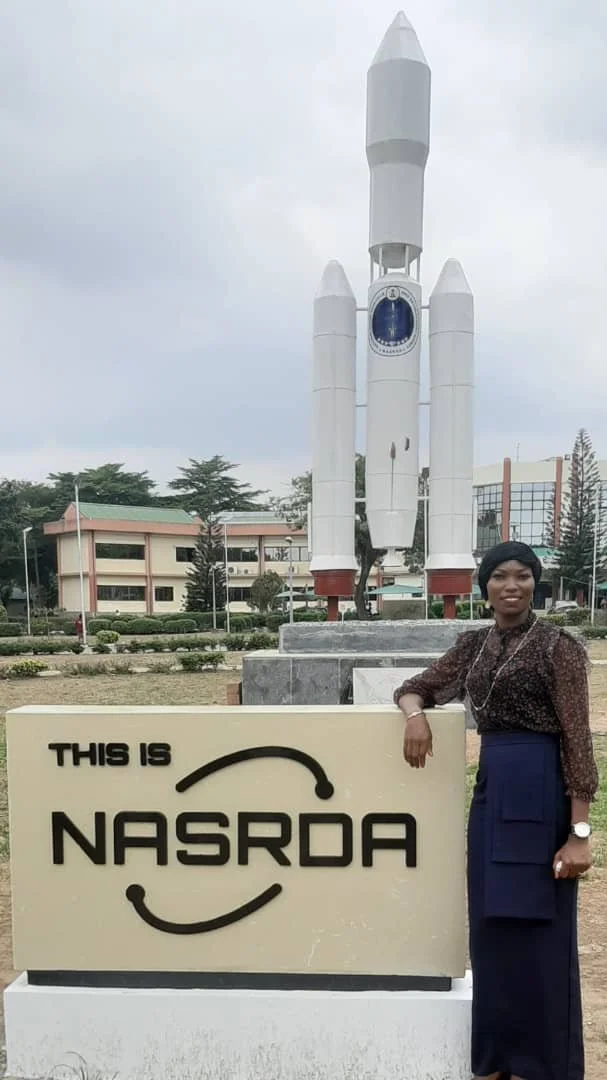
Dr. Funmilola Oluwafemi is a bioscientist who serves as Chief Scientific Officer at the Nigerian Space Research and Development Agency (NASRDA), within the Space Life Sciences Division.
Her achievements include the Zonta International Amelia Earhart Fellowship (2022/2023), the AGNES-PAWS Grant (2021), the UNESCO-ICB PhD Scholarship Award (2021), and the CLIFF-GRADS Scholarship in food security. She has collaborated in research and education with the United Nations Office for Outer Space Affairs (UNOOSA).
Dr. Funmilola is committed to mentoring young scientists and developing a space culture in Nigeria and beyond.
I currently lead the space biology program as the Unit head at NASRDA Headquarters. My research keywords span across space life sciences, spaceflight/astronautical hygiene, gravitational biology, space medicine and healthcare, space biochemistry, Isolated, Confined and Extreme (ICE) environments research, agricultural greenhouse gas (GHG) research, climate smart agriculture (CSA) etc.
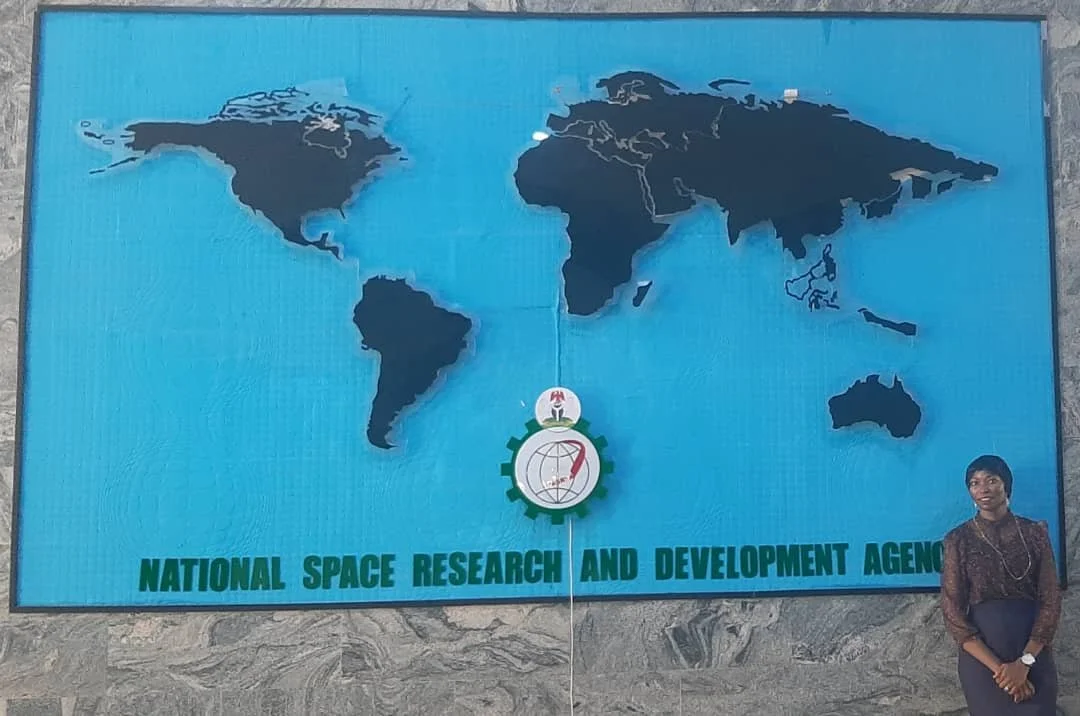
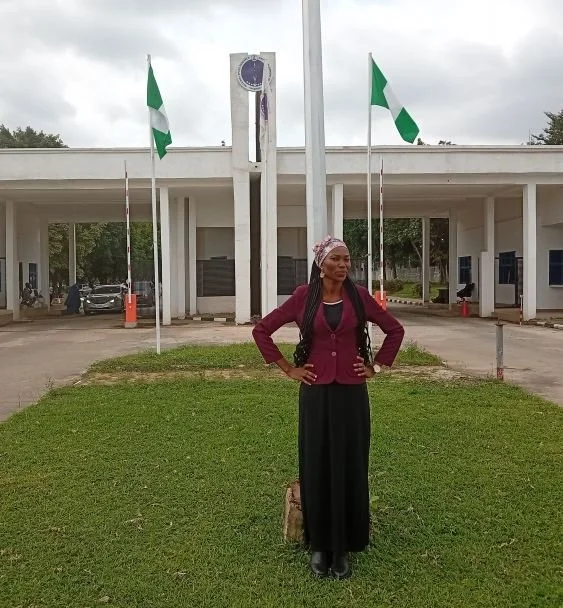
My interest in biology as a child sparked my pursuit of career in biosciences. After completing my Bachelor of Science in Biochemistry and Master of Science in Membrane Biochemistry and Biotechnology, I was employed by the Nigerian Space Agency – National Space Research and Development Agency (NASRDA), Abuja, Nigeria. I was deployed to the Space Life Sciences Division. As one of the pioneers in this Division, I personally sought guidance of what research to be engaged with from NASA – National Aeronautics and Space Administration's Space Life Sciences Department website. On their website I saw diverse researches that include microgravity research, plants in space, animals in space, research on physiological effects of the space environment on human etc. This became fascinating to me, and this made me pursue my PhD in space biochemistry. Winning a simulated-microgravity equipment called Clinostat from UNOOSA in 2015 further fueled my research passion till date.
Space sparkling collaborations across disciplines
I am a bioastronautics by profession; but specifically my PhD is in space biochemistry. On some projects, I worked with some engineers; especially in the design of “Space Suit for Mars”. I have worked with some space lawyers, whereby we deduced some certain space policies for astronomy. I have also worked on projects that has to do with space health and medical doctors for the benefits of lives in space and lives on earth via space applications.
I have been researching in the field of space agriculture and specifically agricultural greenhouse gas (GHG) research and climate smart agriculture (CSA) because it has been established that the agricultural sector contribute approximately 40% to climate change, and GHG at the space edge (extreme atmosphere) can make satellites to crash back to the Earth. Hence, this research is worthy or worthwhile as it is important to the space sector and space industry as a whole. Therefore, I have been able to collaborate with diverse agriculturists to advocate for certain policies as to this regard.
Amongst others, I have been able to collaborate and been in contact with astronauts, pilots, spacecraft and aircraft designers and top leaders like United Nations Directors, Director Generals of Space Agencies etc.
Hopes and dreams for the future of human presence in space
Since 1960, it has been said that the next decade, there would be manned mission to the moon or to another planet such as Mars. From that time to this time; it is still the next decade. As a researcher in the space sector, I now fully understand the challenges that surrounds deep space manned missions. Hence, as a researcher in the space industry, I believe it is possible and day by day we are moving closer to this dream; even my personal research out there spanning from spaceflight/astronautical hygiene, Environmental Control and Life Support System (ECLSS), space farming, gravitational biology, space medicine and healthcare, Isolated, Confined and Extreme (ICE) environments research etc. are all tending towards manned missions to deep space.
Influence of the new space age on the way we think of our humanity
People are now getting to know that almost everyone benefits from space technology. Right from the television you watch, the radio you listen to, the phone in your hands. Just name it. Now coming down to the spin offs of space exploration. The benefits are massive. Hence, this space age has a lot to do with us humans. The spin offs of space technologies stem benefits from healthcare such as surgical tools like laser eye surgery to food safety systems, water purification systems, air purifiers, pollution control, satellite-driven data for crops, safety enhancements like fire-resistant materials for firefighting etc.
Dr.Funmilola Oluwafemi, 2026