Paola Zamudio Torres: Between Laws and Orbits: Who Gets to Shape Space?
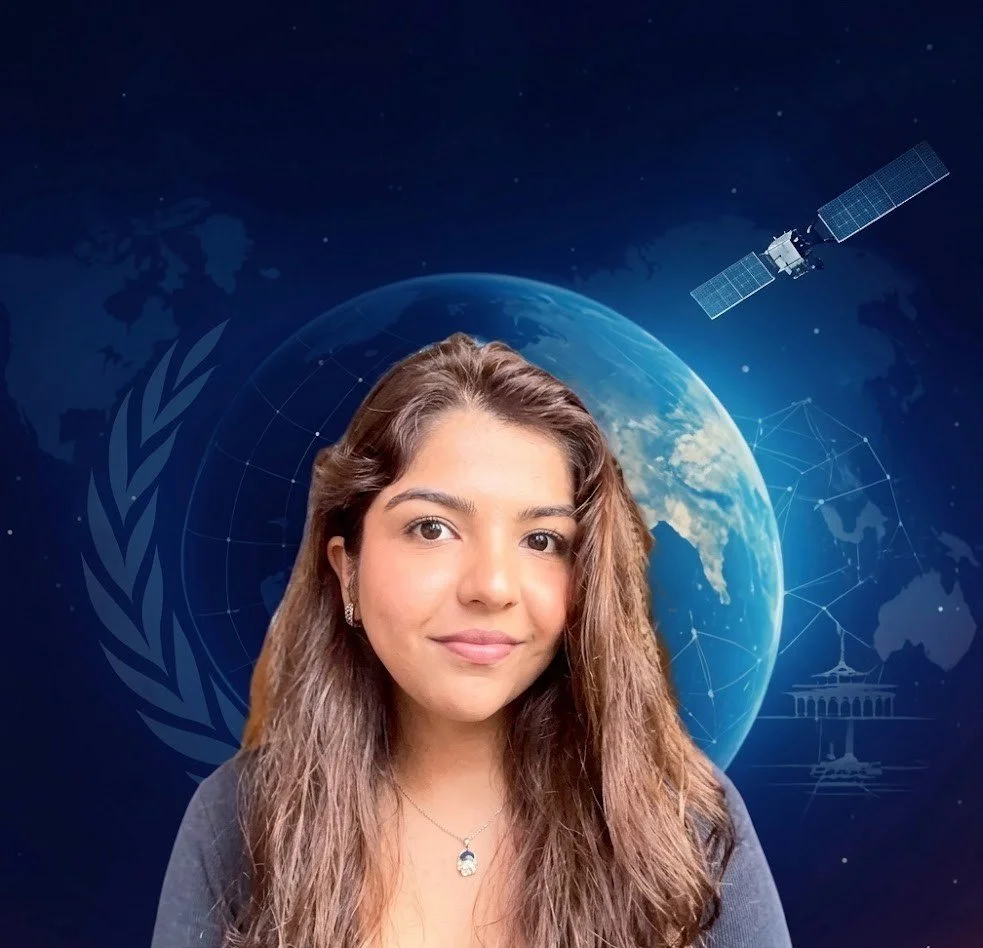
Paola Zamudio Torres is a Mexican lawyer working at the intersection of international law, space governance, and access to the space sector. Her work focuses on how legal and policy frameworks shape the future of space activities, with particular attention to sustainability, responsible behavior and inclusive participation.
She is actively engaged in the global space community through the Space Generation Advisory Council (SGAC), where she leads international initiatives and contributes to projects on space law and policy. In parallel, she collaborates with organizations such as the Space Court Foundation and AstroAid Foundation, supporting research on governance and the societal applications of space technologies.
Beyond research, Paola is committed to expanding access to the space sector. Her work reflects a broader interest in ensuring that as space evolves, its governance becomes not only more effective but also more inclusive and representative of the global community it affects.
It always starts with a question. When we are children, we are asked: “what do you want to be when you grow up?” The answers are endless: astronaut, scientist or even singer. At that age, dreaming about space feels natural.
Later, the same question comes back but the answers change. They become more “realistic” and “acceptable”. Somewhere along the way, space starts to feel distant. Not because it is physically far but because it begins to feel out of reach.
I remember looking at the sky as a child and asking questions that didn’t have simple answers like: “Why are there so many stars?” or “why does the moon seem to follow us?”
At the time, the answers didn’t matter as much as the feeling behind the questions. I was curious and I had this wonder, the sense that there was something much bigger beyond what we could see. That curiosity stayed with me. But as I continued my studies in law, the questions changed. They became: “Who decides what happens in space?” or “What rules apply up there?”or “If space belongs to everyone, who is actually making the decisions?”
Because space is not a lawless domain. There is a legal framework that is developed through international treaties and that establishes key principles: some of them being that space should be used for peaceful purposes, that no country can claim sovereignty over it and that activities should benefit all humankind.
These rules define responsibility, they regulate behavior and create the structure that allows space activities to exist in the first place. But there’s a catch. Most of them were written in a different time. A time when only a few countries had access to space.
Today, that reality has changed. Space is more crowded, more commercial and more accessible than ever before. Private companies are launching satellites at unprecedented rates and new countries are entering the sector. Conversations about lunar exploration or use of resources and long-term presence in space are no longer theoretical. And yet, the legal frameworks have not fully evolved to match this new reality.
There is another gap that is less visible but just as important. This means that not everyone participates equally in shaping these rules and that access to the space sector is still influenced by geography, resources and opportunity. In regions like Latin America, many countries are still building their capabilities.
At the same time, we have structural barriers, whether that be from funding limitations to regulatory restrictions and they continue to define who can engage meaningfully in the field.
This is why space governance cannot remain a conversation among a few. The future of space will not only depend on technology, it will also depend on who is included in the decisions that shape how that technology is used. Law is not just a background element.
There is also a persistent idea that space is only for technical disciplines but in my opinion space has never been only about engineering. There are so many opportunities to make a change and be part of it. Law, policy and even ethics are essential to understanding how space can function as a shared domain. They answer new questions that technology alone cannot like: “How do we share resources?” “How do we prevent harm?” and the most important “How do we ensure that space remains accessible to future generations?”
For me, being “present in space” does not just mean going to space. It means having a voice in how space is governed and being part of that creation of pathways for others to be part of that conversation. Understanding that space is not just a place to explore and discover but also a system we are collectively responsible for.
Right now, we are living through a moment of transition. Space is expanding faster than the structures designed to govern it. That’s why there is so much uncertainty but also possibility to rethink how we want everyone to participate.
The future of space will not be defined only by launches or technology. It will be shaped by rules, by decisions and most importantly by the people involved in making them.
And now maybe the most important question will no longer be whether space will evolve but whether everyone will have the opportunity to be part of that evolution.
Paola Zamudio Torres, 2026