Alejandra Islas (Astro Teacher Ale): Space, A Classroom Without Borders
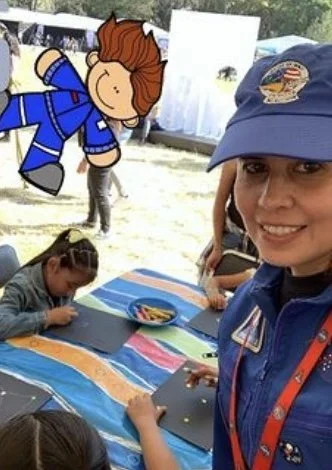
Alejandra Islas, known as Astro Teacher Ale, is a preschool teacher and STEM advocate based in Mexico. She promotes space education in the classroom and supports teachers’ role in the space sector through initiatives like Stardust Odyssey, helping inspire the next generation of space-minded learners.
As a mentor with Mujeres Hacia el Espacio, she also encourages girls and young women across the Ibero-American region to pursue careers in science, technology, and leadership.
Astro Teacher Ale runs her own YouTube educational channel, where she shares the latest space news in Spanish.
The cosmos is no longer a distant dream reserved for a select few; it is a vibrant classroom without borders where curiosity meets the future of humanity. Throughout my journey as a preschool educator and a dedicated STEM advocate, I have witnessed how the wonders of the universe can transform a child’s perspective.
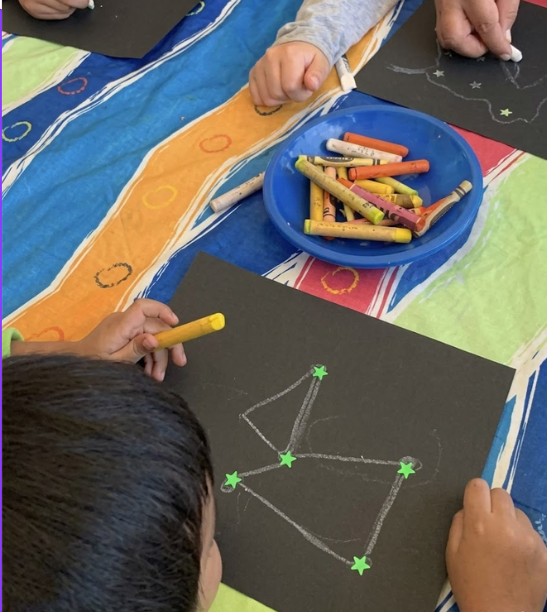
I vividly remember a five-year-old student who once told me, "I can't be an astronaut because I'm afraid of the dark." During a workshop where we explored the International Space Station as a home in the stars, we used a "space tent" to simulate the orbital environment. I explained that in space, we carry our own light and that the darkness is simply the canvas for the stars. By the end of the week, she had not only lost her fear but told her parents she wanted to be a "Space Architect" to build bright houses on the Moon. That shift—from a fear of the unknown to a desire to build for the future—is the most powerful transformation I have witnessed.
The Multi-Disciplinary Mission
My role as a Stardust Ambassador and a mentor for Mujeres Hacia el Espacio has allowed me to champion the idea that the space sector is inclusive and multidisciplinary. Through my collaboration with Stardust Odyssey, I work to democratize access to space education by bridging the gap between space technology and the classroom. This program provides authentic STEAM resources and satellite data to educators globally, fostering a community of space inspired learners.
Similarly, as a mentor for Mujeres Hacia el Espacio, I focus on closing the gender gap in the aerospace sector within the Ibero-American region. By providing guidance and professional orientation, I encourage girls and young women to pursue their talents in high-level scientific and leadership roles, proving that the space industry needs their unique perspectives.
Whether I am serving as a NASA Space Apps Stellar Judge, an eCybermission Virtual Judge, or hosting "Astro Amigos Conversan" on my YouTube channel, my mission remains the same: to demonstrate that all professions lead us to space.
The Awakening of a New Educational Consciousness
Education can no longer be confined within four walls. We are living in a historic moment as humanity prepares for a permanent return to the Moon, and this landscape demands that teachers become the guides for this transition. My motivation stems from a fundamental realization: children today are growing up in the Artemis Era, yet our classrooms often remain in the past.
As a preschool teacher, I noticed that children are natural explorers who constantly ask "why." I realized that space is the ultimate "hook" for STEM education—it is not just about rockets; it is about teamwork, resilience, and problem-solving. I chose to specialize in this field to ensure that the spark of curiosity in my "little astronauts" never goes out, proving that every child has a seat at the table.
The Artemis II Horizon: Mission Controllers of Potential
The Artemis II mission represents a pivotal turning point and a symbol of human collaboration. When I speak with fellow educators about Artemis, I don’t just focus on the SLS rocket or the Orion capsule; I focus on the real-world context it provides for challenges in sustainability, nutrition, and communication. Seeing a diverse crew serves as a powerful inspiration, showing children that anyone, regardless of their background, can reach for the stars.
In this new era, teachers are no longer just dispensers of information; we are the mission controllers of human potential. We must act as the bridge between complex scientific advancements and the classroom, using space as a "transversal tool" to teach everything from ethics and law to art and biology.
A Call to Action
My message to my colleagues is simple: do not fear the vastness of the universe. Incorporate space into your lesson plans, talk about the stars in language arts, and use lunar exploration to teach resilience. The path to the stars is not only traveled in a spacecraft; it is built step by step in the heart of every student who believes the sky is not the limit, but the beginning.
Because together, we will reach the stars✨.
Astro Teacher Ale, 2026
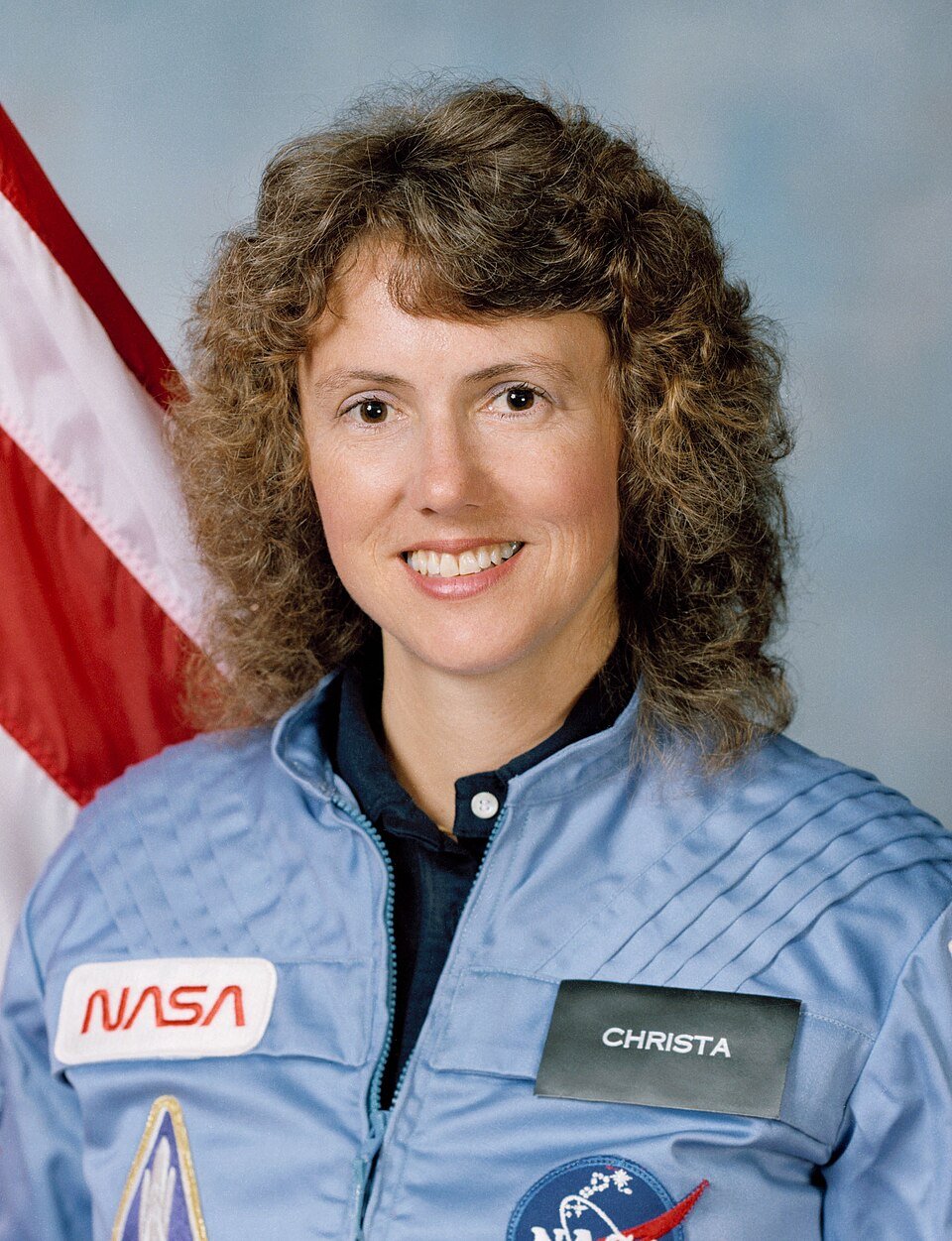
Remembering Christa McAuliffe (1948-1986)
Christa McAuliffe was an American teacher and civilian astronaut candidate, best known for being selected as the first educator in space. Born in 1948, she taught social studies and English in New Hampshire and became part of NASA’s Teacher in Space Project, an initiative aimed at bringing education and space exploration closer together.
She was scheduled to fly aboard the Space Shuttle Challenger mission STS-51-L in 1986, where she would have conducted lessons from orbit. Tragically, she died on January 28, 1986, when Challenger was lost shortly after launch. Her legacy continues to inspire educators and students worldwide, and she remains a symbol of the connection between teaching and exploration.